

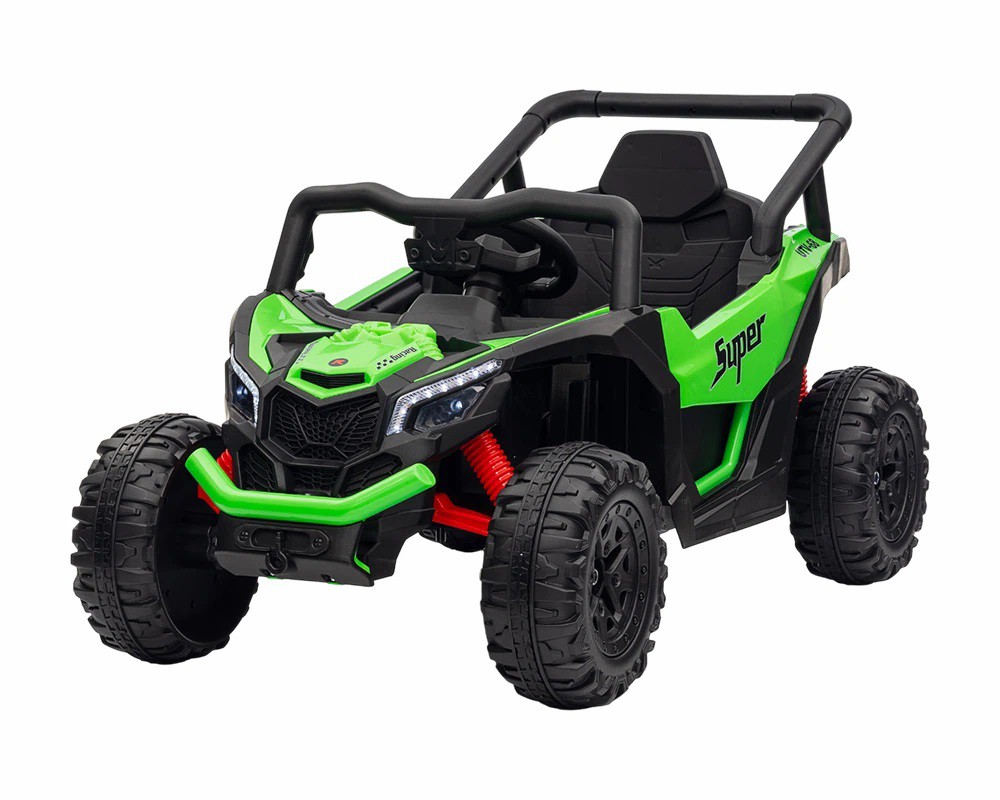


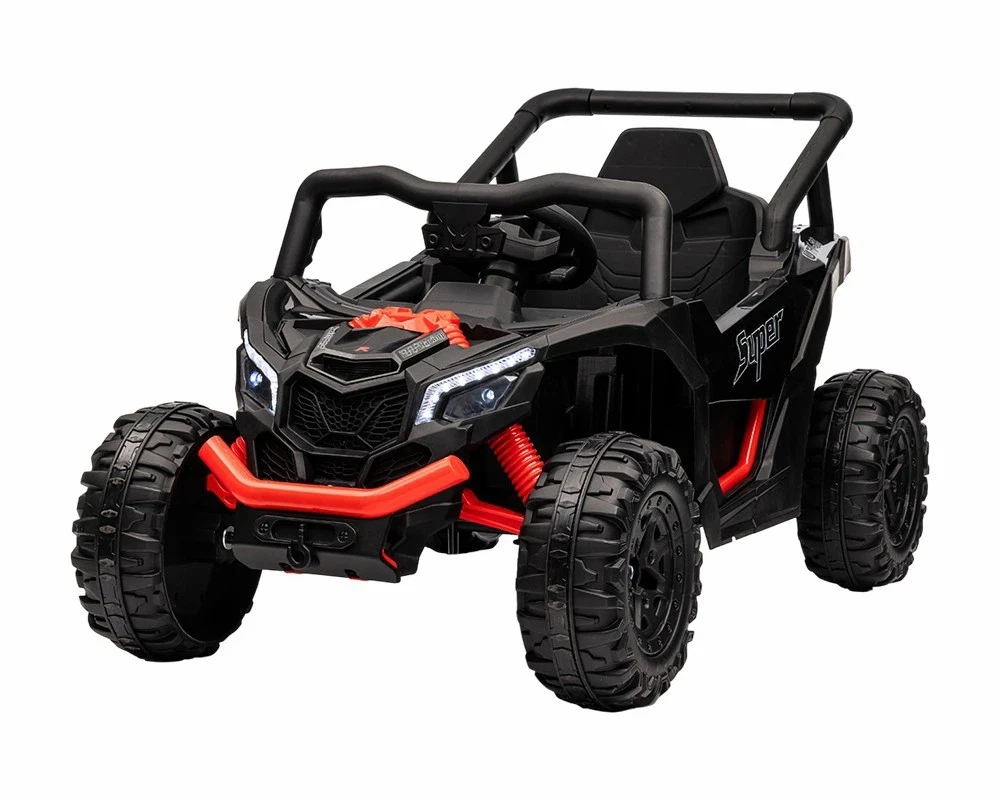
Product Specifications
|
Product Name |
Ride On Mini Car |
|
Battery |
12V4.5AH*1 |
|
Running Time |
Up to 35 mins on a full charge |
|
Motor |
35W(540*2) |
|
Maximum Speed |
5.5 km/h |
| Parental Control | Speed and direction adjustment and emergency brake for instant stop |
|
Remote Control specifications |
2.4G controller with 30-50 meters |
|
Charging Time |
8-12 Hours on a full charge |
| Child-Friendly Seats | Ergonomic design with durable plastic |
| Tires | Non-Slip EVA Tires |
| Seat Belt | Integrated seat belts to prevent accidental falls while driving |
|
Color |
Red, White, Black, Rose Pink |
|
Suitable Age |
3-8 years old |
Upgrade method

● Battery (Upgrade to 12V10AH)
● Battery Upgrade (12V->24V)
● 2WD to 4WD
● High-Gloss Baked Finish
● Air/EVA Tires
● Bluetooth
● Leather Seat
● Key Start
Features
● It can move forward and backward.
● It has double doors.
● It features gentle start and stop functions.
● It offers high and low speed options.
● It is equipped with front headlights.
● It comes with a USB multi - functional player.
● It has rear wheel shock absorbers.
● There is a small trunk behind the seat.

Testing certificate

FAQ
Q: How does the velocity modulation system accommodate neurodevelopmental progression?
The adaptive drive architecture employs microprocessor-controlled acceleration curves with three skill tiers:
Novice Mode: Torque-limited 1.2 m/s² ramp-up, capped at 4 km/h
Intermediate Mode: Progressive PID-controlled throttle (6 km/h max)
Expert Mode: Dynamic traction allocation (8 km/h) with overcurrent safeguards
Caregivers can recalibrate parameters via CAN bus diagnostics or companion app, aligning with Gross Motor Function Classification System milestones.
Q: What multisensory engagement subsystems enhance cognitive stimulation?
The neurodevelopmental interface integrates:
Optical: 16-bit RGB LED arrays with ambient light-responsive PWM dimming
Auditory: DSP-enhanced audio (supports AAC/MP3 via A2DP protocol, 2x5W drivers)
Tactile: Haptic feedback steering (0.5–3N vibration alerts)
Programmable through Montessori-inspired play modules that activate via motion sensors (≥1.5G acceleration triggers).
Q: Describe the hierarchical safety architecture.
Active Protection
ECU-managed stability control (50Hz gyro sampling)
Dynamic brake force distribution (EBD algorithm)
Emergency stop torque reversal (-2.5 m/s² deceleration)
Passive Protection
Five-point harness with load-limiting pretensioners (FMVSS 213 compliant)
Energy-absorbing crumple zones (30kJ impact dissipation)
Antimicrobial seating (ISO 22196:2011 certified)
Q: What material validation protocols ensure biocompatibility?
A three-phase verification process:
Screening: FTIR spectroscopy for polymer purity (≤50 ppm VOC emissions)
Mechanical: 5,000-cycle ASTM F963-17 abrasion testing
Toxicological: EN 71-3:2019 migration limits for 19 heavy metals (ICP-MS verified)
All surface coatings undergo cross-hatch adhesion testing per ISO 2409:2020, with blockchain-tracked material provenance from resin synthesis to final assembly.
Hot Tags: ride on mini car, China ride on mini car manufacturers, suppliers, factory, childrens electric cars 2 seats, ride on kids car, motorized car, USB Multi Function Player Ride On Car, ride on battery powered toys, best ride on car with remote


