

As a dedicated supplier of ride - on cars, I've witnessed firsthand the diverse range of factors that can influence the performance and experience of these delightful vehicles. One aspect that often comes under scrutiny is the weight of passengers. In this blog post, we'll delve into the scientific and practical implications of passenger weight on ride - on cars, exploring how it impacts speed, battery life, durability, and overall ride comfort.
Impact on Speed
The weight of passengers has a direct bearing on the speed of a ride - on car. According to basic physics principles, Newton's second law of motion (F = ma) states that force is equal to mass times acceleration. In the context of a ride - on car, the motor provides the force to move the vehicle. When the mass (weight of passengers) increases, for the same amount of force generated by the motor, the acceleration will decrease.
For instance, a 24v Off Road Ride On is designed with a certain power output from its motor. If a lighter child is on the car, the motor can more easily accelerate the vehicle, allowing it to reach its maximum designed speed relatively quickly. However, when an older or heavier child takes the seat, the motor has to work harder to move the additional mass. As a result, the acceleration is slower, and the top speed may also be reduced. This is similar to how a real - life car will have different performance characteristics when carrying a full load of passengers compared to when it's empty.
Battery Life Considerations
Battery life is another crucial factor affected by passenger weight. Ride - on cars are typically powered by rechargeable batteries, and the energy consumed by the motor is directly related to the work it has to do. When a heavier passenger is on board, the motor needs to expend more energy to move the car, which in turn drains the battery faster.
Let's take a Toys Ride On Car as an example. A standard battery in this type of car is rated to provide power for a certain period under normal operating conditions. With a lighter child, the motor operates more efficiently, and the battery can last longer. But if a heavier child uses the car, the motor has to draw more current from the battery to maintain movement. This increased current draw shortens the overall battery life per charge. So, if a battery usually lasts for an hour with a light passenger, it might only last for 30 - 40 minutes with a much heavier one.
Durability of the Ride - on Car
The weight of passengers can also affect the durability of a ride - on car. The various components of these cars, such as the frame, wheels, and suspension system, are designed to withstand a certain amount of weight. Exceeding the recommended weight limit can put excessive stress on these parts.
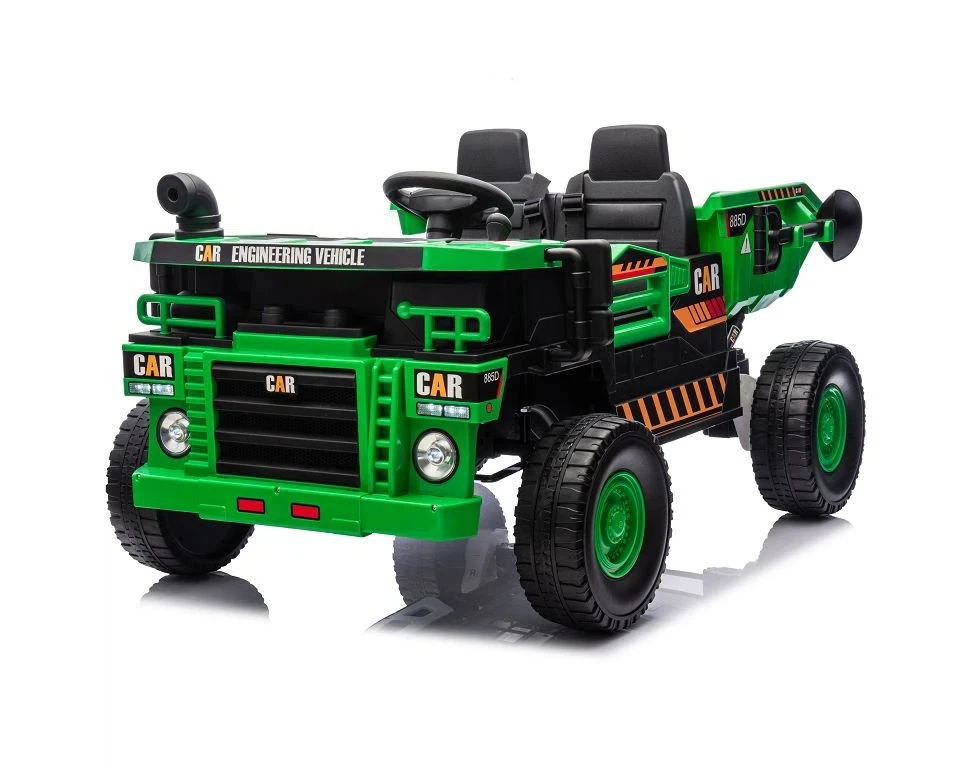
For a 2 Seater Ride On Toy, the frame is engineered to support the combined weight of two passengers within a specified range. If heavier children or even multiple children whose combined weight exceeds the limit are frequently using the car, the frame may start to show signs of wear and tear more quickly. The wheels may also experience more rapid deterioration, with increased wear on the tires and potential damage to the axles. The suspension system, which is responsible for providing a smooth ride, can be over - stressed, leading to a less comfortable ride and potentially shortening the lifespan of the system.

Ride Comfort
Ride comfort is significantly influenced by passenger weight. A ride - on car's suspension system is designed to absorb shocks and vibrations from uneven surfaces. When a lighter passenger is on the car, the suspension can work as intended, providing a relatively smooth and comfortable ride. However, a heavier passenger can compress the suspension more than it's designed for.
This over - compression can result in a harsher ride, as the suspension is less able to absorb the bumps and jolts. The car may also handle differently; for example, it may be more difficult to steer, especially at lower speeds. The seat, which is designed to support a certain weight range, may also become less comfortable for a heavier passenger, as it may not provide adequate cushioning and support.
Considerations for Parents and Suppliers
For parents, understanding the impact of passenger weight on ride - on cars is essential for making informed purchasing decisions. They should carefully check the weight limits specified by the manufacturer when selecting a ride - on car for their child. If they have multiple children of different weights who will be using the car, they need to consider a model with a higher weight capacity to ensure long - term usability and safety.
As a ride - on car supplier, we play a crucial role in educating our customers about these factors. We need to clearly communicate the weight limits of each product and provide detailed information about how weight can affect performance, battery life, and durability. By doing so, we can help our customers choose the most suitable ride - on car for their needs and ensure that they have a positive experience with our products.
Conclusion
In conclusion, the weight of passengers has a profound impact on the ride on a car in terms of speed, battery life, durability, and ride comfort. As a ride - on car supplier, we are committed to continuously improving our products to better accommodate different weight ranges and provide a high - quality experience for all users.
If you're interested in learning more about our ride - on cars or are considering a purchase, we encourage you to reach out to us for further discussions. We are here to assist you in finding the perfect ride - on car that suits your specific requirements and ensures endless hours of fun and safety for your little ones.
References
- Halliday, D., Resnick, R., & Walker, J. (2014). Fundamentals of Physics. Wiley.
- Automotive Engineering Handbook. (2010). Society of Automotive Engineers.