

How fast can a Dual Speed Ride On Car go?
As a supplier of Dual Speed Ride On Cars, I often get asked about the speed capabilities of these exciting vehicles. Dual Speed Ride On Cars are designed to provide a thrilling and safe experience for young riders, and understanding their speed potential is crucial for both parents and enthusiasts. In this blog post, I'll delve into the factors that influence the speed of a Dual Speed Ride On Car and provide some insights into what you can expect.
Understanding Dual Speed Systems
Dual Speed Ride On Cars are equipped with a unique feature that allows them to operate at two different speeds. This feature provides flexibility and caters to different skill levels and preferences. Typically, the lower speed setting is designed for beginners or younger children, offering a slower and more controlled ride. The higher speed setting, on the other hand, is for more experienced riders who are looking for a bit more excitement.
The speed of a Dual Speed Ride On Car can vary depending on several factors, including the design of the car, the power of the motor, and the type of battery used. Let's take a closer look at each of these factors.
Design of the Car
The design of the Dual Speed Ride On Car plays a significant role in determining its speed. Cars with a streamlined and aerodynamic design tend to be faster as they encounter less air resistance. Additionally, the weight of the car can also affect its speed. Lighter cars are generally more agile and can achieve higher speeds more easily.
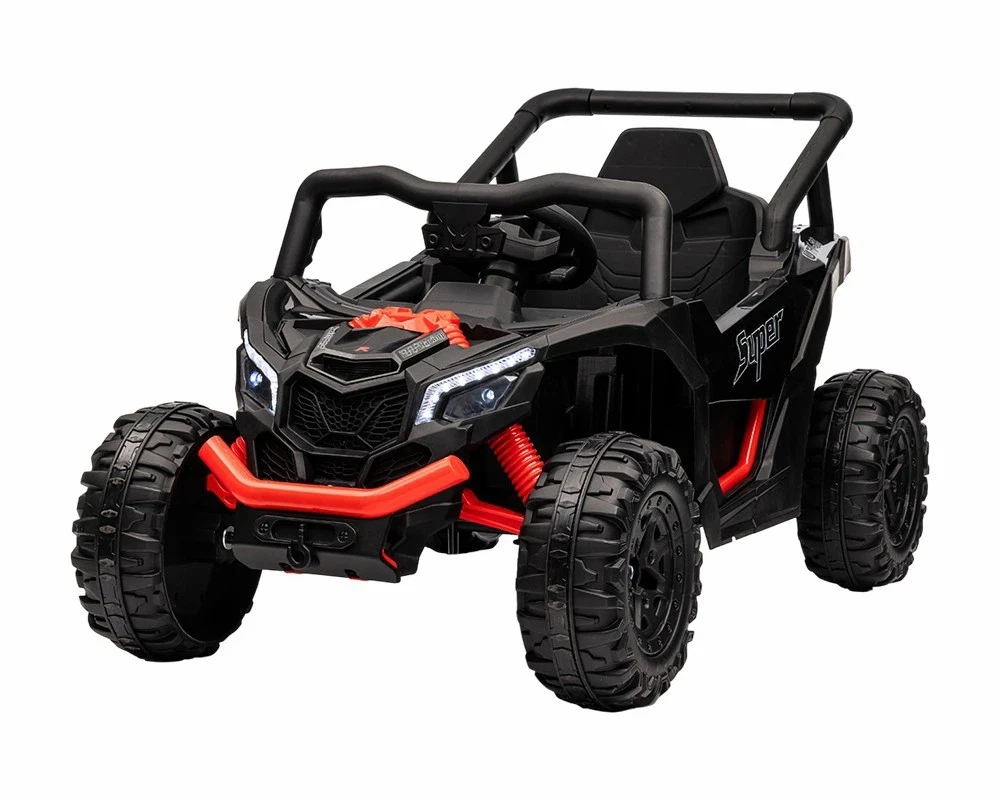
Another important design aspect is the type of wheels and tires used. Cars with larger wheels and high - quality tires can provide better traction and stability, which can contribute to a faster and smoother ride. Some Dual Speed Ride On Cars are also equipped with suspension systems that help to absorb shocks and improve handling at higher speeds.
Power of the Motor
The motor is the heart of the Dual Speed Ride On Car, and its power directly impacts the speed of the vehicle. Most Dual Speed Ride On Cars are powered by electric motors. The wattage of the motor is a key indicator of its power. Higher - wattage motors can generate more torque, which allows the car to accelerate faster and reach higher top speeds.
For example, a Dual Speed Ride On Car with a 12 - volt motor may have a different speed range compared to one with a 24 - volt motor. Generally, cars with higher - voltage motors are capable of achieving faster speeds. However, it's important to note that the speed is also regulated by the dual - speed system to ensure safety.
Type of Battery
The battery is another crucial component that affects the speed of a Dual Speed Ride On Car. The capacity and voltage of the battery can impact the performance of the motor. A fully charged battery with a higher voltage can provide more power to the motor, allowing the car to reach its maximum speed potential.
Most Dual Speed Ride On Cars use rechargeable batteries. Lithium - ion batteries are becoming increasingly popular due to their high energy density and long lifespan. They can provide a consistent power supply, which is essential for maintaining a stable speed during the ride.
Typical Speed Ranges
So, how fast can a Dual Speed Ride On Car actually go? In general, the lower speed setting of a Dual Speed Ride On Car usually ranges from 1 to 3 miles per hour (mph). This speed is ideal for young children who are just learning to drive and need a slow and steady pace.
The higher speed setting can vary depending on the factors mentioned above. On average, it can range from 3 to 6 mph. However, some high - performance Dual Speed Ride On Cars may be able to reach speeds of up to 8 mph. It's important to remember that these speeds are designed to be safe for children and are well within the limits of what is considered appropriate for a ride - on toy.
Safety Considerations
While the speed of a Dual Speed Ride On Car can be exciting, safety should always be the top priority. These cars are equipped with various safety features to ensure a secure ride. For example, most models have a parental remote control that allows parents to override the speed settings and stop the car in case of an emergency.
Additionally, the cars are designed with low - center - of - gravity to prevent tipping over, and the seat belts and padded seats provide added protection. It's also recommended that children wear helmets and other protective gear when riding these cars, especially at higher speeds.
Comparing with Other Ride - On Toys
When comparing Dual Speed Ride On Cars with other types of ride - on toys, such as Truck Toy Ride On, Ride On Mini Car, and Ride On Dump Truck, the speed capabilities can vary.
Truck Toy Ride Ons are often designed for more rugged play and may have a similar speed range to Dual Speed Ride On Cars, but their heavier build may result in slightly lower top speeds. Ride On Mini Cars, on the other hand, can be quite zippy and may offer comparable or even higher speeds in some cases. Ride On Dump Trucks are usually more focused on functionality and may have a more limited speed range.
Conclusion
In conclusion, the speed of a Dual Speed Ride On Car is influenced by several factors, including the design of the car, the power of the motor, and the type of battery. These cars typically offer a lower speed setting for beginners and a higher speed setting for more experienced riders, with speeds ranging from 1 to 8 mph.
As a supplier, I take pride in offering high - quality Dual Speed Ride On Cars that provide a perfect balance between excitement and safety. Whether you're looking for a fun toy for your child or a bulk purchase for a retail store, I'm here to assist you. If you're interested in learning more about our Dual Speed Ride On Cars or would like to discuss a potential purchase, please feel free to reach out. We can work together to find the best solution for your needs.

References
- Child Toy Safety Standards Handbook. National Safety Council.
- Electric Toy Vehicle Technology. Journal of Toy Engineering.